
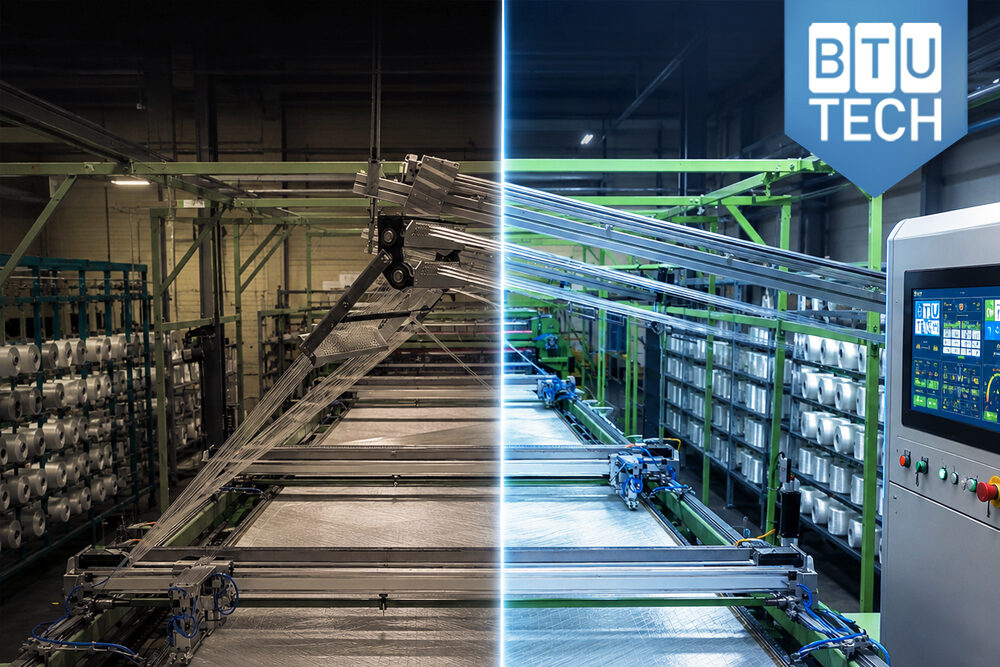
For many multiaxial non-crimp fabric manufacturers, older multiaxial machines are not actually “finished”.
The mechanical structure of a multiaxial machine is often designed to operate reliably for decades. Frames, guide systems, carrier tracks and other core mechanical components can remain productive long after the machine is commissioned.
What usually becomes outdated first is the automation system behind the machine.
Old industrial PCs, unsupported controllers, obsolete motion systems, synchronization issues, limited communication capabilities and increasingly difficult spare part availability can gradually reduce efficiency while increasing maintenance requirements and downtime risks.
This difference between mechanical lifetime and automation lifetime is one of the main reasons retrofit projects have become increasingly relevant throughout the composites and technical textiles industry.
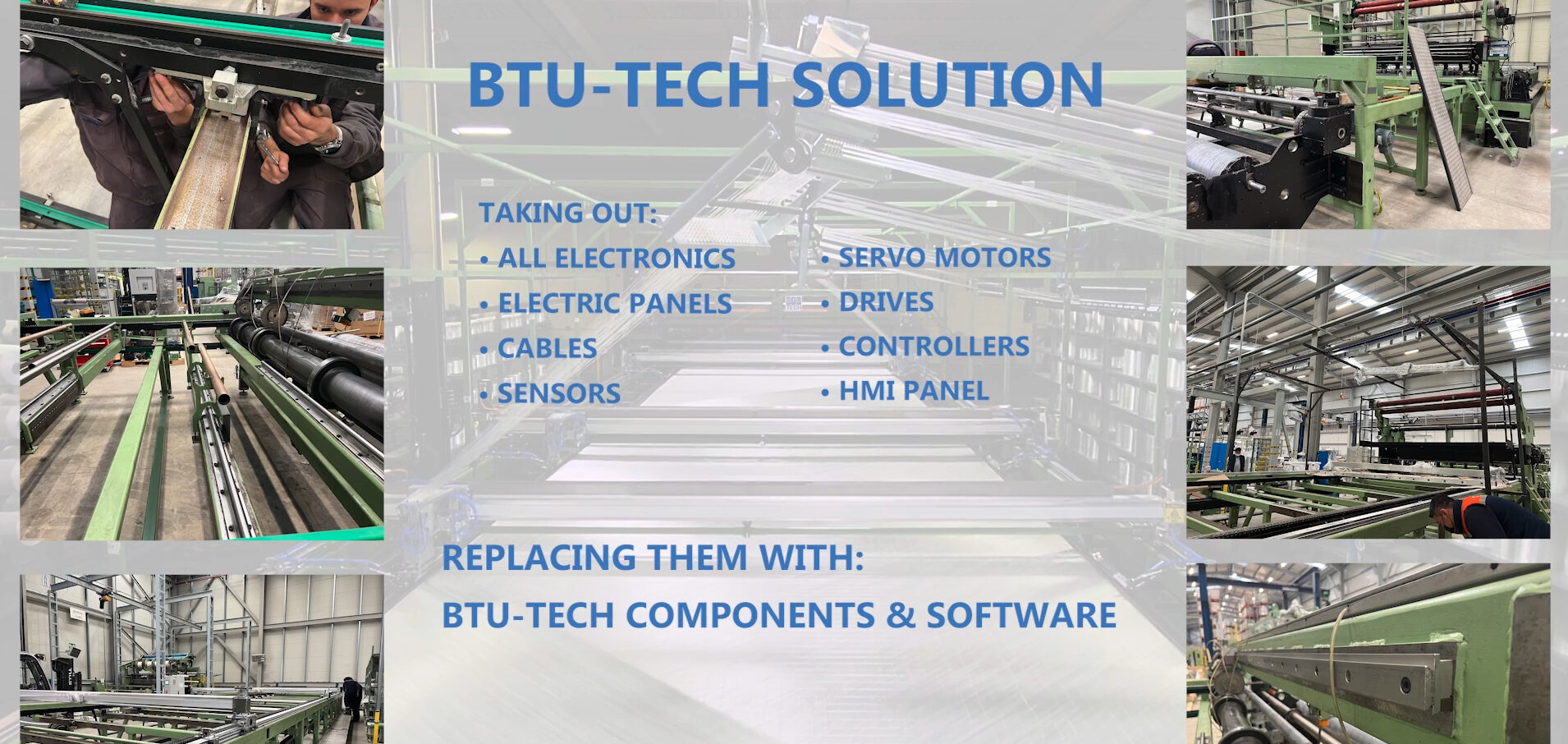
Instead of replacing the entire machine, retrofit upgrades the automation architecture while keeping the existing mechanical platform.
Modern retrofit projects may include:
- new motion control systems
- servo drive upgrades
- modern HMI interfaces
- automatic calibration systems
- advanced safety architectures
- Industry 4.0 compatible communication infrastructure
In many legacy multiaxial lines, operators still rely on Windows-based control computers, manual synchronization procedures and outdated communication systems. After emergency stops or unexpected interruptions, recalibration can become time-consuming and production recovery may take considerably longer than required.
Modern automation platforms are designed to simplify these processes through integrated motion control, automated synchronization functions and improved operator interfaces. At the same time, digital communication capabilities allow production data to be shared directly with factory-wide monitoring and management systems.
Another important consideration is project implementation. Historically, retrofit projects have often been associated with long engineering schedules and extended production interruptions. For many manufacturers, the concern is not only the investment itself, but also the operational impact of modernization.
As a result, successful retrofit projects increasingly focus on minimizing downtime while preserving as much of the existing mechanical infrastructure as possible. In many cases, existing peripheral equipment such as winders, batching devices and chopper systems can also remain in operation through integration with modern control architectures.
The objective is simple:
Keep the mechanical investment.
Modernize the intelligence behind it.
For many manufacturers, retrofit has become a practical and efficient way to extend machine life, improve operational reliability and modernize production capabilities without replacing an entire line.
Because sometimes the machine is not old.
Only the system behind it is.
To learn more about BTU-TECH innovative technologies, please visit www.btu-tech.com and discover the BTU-TECH Multiaxial Retrofit System.
To discuss your projects, please contact us via LinkedIn or send us an email at info@btu-tech.com.