
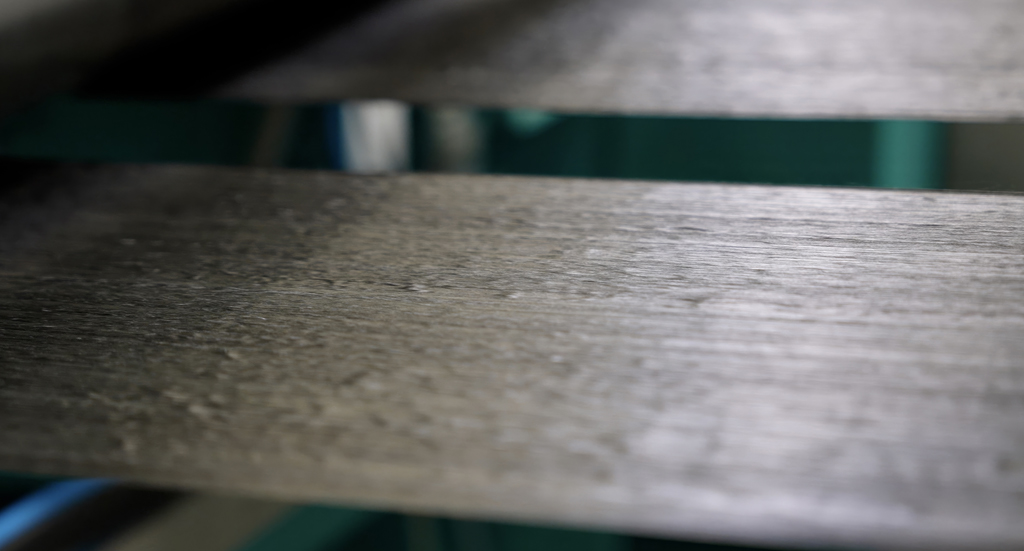
Carbon fiber spreading is one of the most critical processes in the production of carbon multiaxial fabrics. Whether manufacturing unidirectional reinforcements or multiaxial non-crimp fabrics, consistent fiber spreading directly influences fabric quality, mechanical performance and overall production efficiency.
Many carbon fiber spreading lines installed 15–20 years ago are still mechanically capable of operating today. Their steel frames, rollers and spreading mechanisms often remain in excellent condition. Yet despite their robust mechanical design, these machines are increasingly becoming production bottlenecks.
The Real Challenge: Obsolete Automation
In most cases, the limiting factor is no longer the mechanical equipment but the automation system controlling it. Aging PLCs, obsolete motion controllers, unsupported operating systems and discontinued electronic components make maintenance increasingly difficult.
As spare parts become harder to source and technical expertise disappears from the market, even a relatively small electronic failure can bring an entire production line to a standstill for days—or even weeks.
The Growing Cost of Downtime
Unexpected downtime affects far more than production output. It can delay customer deliveries, idle downstream equipment, increase maintenance expenses and reduce manufacturing flexibility. As automation systems continue to age, these risks only become more significant.
Unlike mechanical components that can often be repaired or refurbished, obsolete control hardware may simply no longer be available, making recovery both slower and more expensive.
Retrofit Instead of Replacement
Replacing an entire spreading line is rarely the most economical solution when the mechanical platform remains reliable.
A modern automation retrofit upgrades the machine with new PLCs, motion control systems, electrical cabinets, operator interfaces (HMIs), industrial communication networks and remote diagnostics while preserving the existing mechanical structure.
By combining proven mechanics with current automation technology, manufacturers can significantly improve reliability, simplify maintenance and extend the productive life of their equipment without the cost of a completely new production line.
Preparing for the Future
Today, automation retrofit is no longer just a maintenance strategy—it is an investment in long-term productivity and operational security. Modern control systems make carbon fiber spreading lines easier to maintain, faster to troubleshoot and better prepared for future production requirements.
For manufacturers looking to maximize existing assets while minimizing downtime, upgrading automation has become one of the most practical and cost-effective ways to ensure reliable production for years to come.
To learn more about BTU-TECH innovative technologies, please visit www.btu-tech.com and in particular the innovative BTU-TECH Carbon Spreader Retrofit System.
To discuss your projects, please contact us via LinkedIn or send us an email at info@btu-tech.com.