
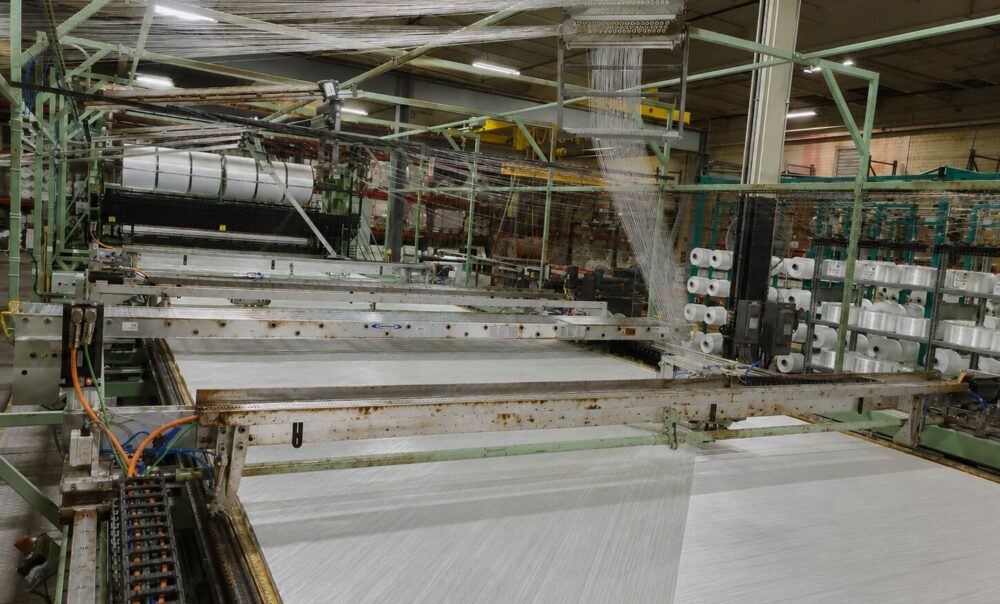
Replacing a multiaxial line is a major decision. It is not only the machine investment itself.
It also means:
- production interruption
- installation time
- operator retraining
- commissioning processes
- long delivery periods
- high capital expenditure
But in many cases, the real question is:
Does the entire machine actually need to be replaced?
Many older multiaxial lines still have mechanically stable structures capable of years of further production. Frames, guide systems, carrier tracks and other core machine components often remain fully functional long after the original automation technology becomes outdated.
The real limitations frequently come from aging control systems, obsolete industrial PCs, unsupported communication hardware and increasingly difficult spare part availability.
As automation technologies evolve much faster than mechanical systems, manufacturers are often faced with a situation where the machine itself remains productive, but the control platform no longer meets modern production requirements.
Retrofit becomes a strong alternative when:
- downtime starts increasing
- spare parts become difficult to find
- automation systems become unstable
- operator usability becomes problematic
- production flexibility becomes limited
- digital communication capabilities are no longer sufficient
- modernization is needed without stopping production for long periods
Another factor is project implementation.
Historically, many modernization projects have been associated with long engineering schedules and extended production interruptions. For manufacturers operating continuous production environments, the operational impact of a modernization project can be just as important as the investment itself.
For this reason, many producers increasingly evaluate modernization strategies based not only on equipment cost, but also on implementation time, production continuity and the ability to preserve existing assets.
Instead of removing the entire line, retrofit modernizes the systems that directly affect production efficiency today.
Typical modernization projects may include:
- motion control system upgrades
- modern operator interfaces
- automated synchronization and calibration functions
- improved safety architectures
- modern industrial communication infrastructure
- integration of existing peripheral equipment
Compared to complete replacement, retrofit projects can offer:
- lower investment cost
- faster ROI
- shorter installation periods
- reduced production interruption
- preservation of existing mechanical assets
- easier adaptation for operators
For many manufacturers, retrofit is no longer a temporary solution.
It is becoming a strategic modernization decision.
As manufacturers continue to balance investment efficiency, operational reliability and production flexibility, modernization of existing assets is increasingly becoming part of long-term production strategy.
Because sometimes replacing the machine is not the only option.
Sometimes modernizing the technology behind it is enough.
To learn more about BTU-TECH innovative technologies, please pay a visit to www.btu-tech.com website and in particular the innovative BTU-TECH “Multiaxial Retrofit.”
To discuss your projects, please contact us via linkedin or send us an email: info@btu-tech.com